
The podcast was originally produced and posted to my personal website on August 7, 2018.
Show Overview
My kids will tell you I cry when my heart is moved by something… a poem, a story or a piece of music, heck… even a television commercial can bring on the tears. It’s something I’ve accepted about myself and don’t deny.
But that something has to be truly exquisite, poignant, or deeply beautiful, something that reaches into the broken puzzle I call my heart and brings forth a salient emotion.
FaceAge had that effect on me. This award-winning video program weaves together interconnected chapters in which young adults and aging individuals reflect on life as they study and describe one another’s faces. The FaceAge experience meets audiences through an immersive three-screen video environment presenting interconnected video chapters built around these cross-generational encounters.
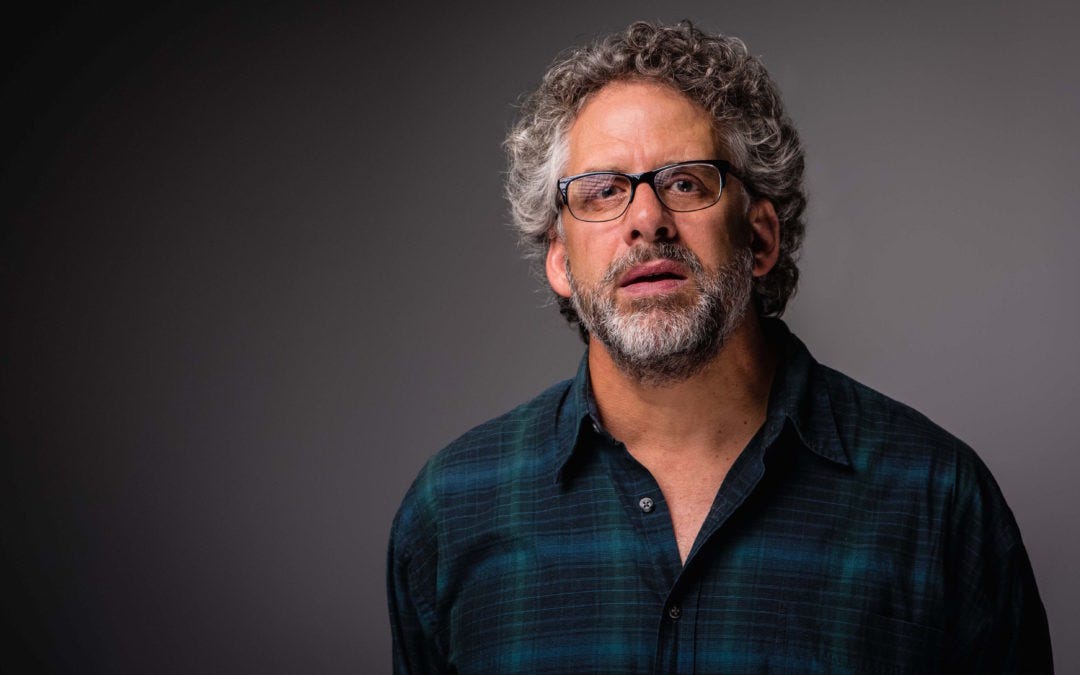
I had the opportunity to experience FaceAge in Washington DC earlier this year, and after wiping my eyes and blowing my nose, I just had to meet the person behind this ground-breaking work of art and science. That’s when I met Andrew Belser, who is presently a professor of Movement, Voice, and Acting at Penn State University, as well as Penn’s Director of the Arts & Design Research Incubator, a studio/laboratory where artists and designers join with scientists, writers, philosophers and others to research and create artistic projects for national and international venues.
If you long to see the gaps between people bridged, as I do, then you will want to learn more about FaceAge, which helps us see ourselves “through the lens of old age,” as Andrew puts it. FaceAge is more than just about intergenerational connection…it is about human healing, and there is nothing more deeply beautiful than that.
What you will learn in this show:
What FaceAge was in 2018, and how to experience it
About the six “chapters” of FaceAge: Assumptions, Mask & Deceptions, Memory, Mortality, What the Face Holds, Being Seen
How age can cause one to become more, or less, visible in different cultures
John Prine’s song “Hello in There”
How the “lens of aging” helps to melt other kinds of differences, like between the races or genders
What the film “Crash” taught us
Relationship insights from Alain de Botton
How the human nervous system is the most complicated thing in the universe
Why we cannot be put in discreet boxes. We are complicated!
What does it really mean to be “old” anyway?
About The Podcast
From 2014 to 2020, I produced 50 podcast shows about death, dying, and the afterlife. Every show featured an expert guest.
The original mission for the podcast was to:
Learn about death, a perfectly natural and unavoidable process, in a lively and open way so we are better able to accept it, plan for a beautiful one, and most importantly, embrace every precious moment of life as a miraculous gift to be savored and cherished.
About a year into the podcast, I began to notice a change in me. Rather than being morbid and creepy, I found the show brought me a distinct joy and fullness to life. I started asking myself deep questions.
How would I live if I knew I only had six months left?
What changes would I make to my career, my relationships, my everyday choices?
Where would I like to travel? Who would I like to meet?
What peak life experiences do I envision enjoying but have yet to pursue? What are my dreams?
What fears prevent me from living my dream now?
Later, I was to learn that meditating on death is practiced by many Buddhists. Mindfulness of death can wake the heart.
After 50 shows, I changed the show’s name to “Dance Past Sunset” and produced a final 16 shows on how to live victoriously in the second half of life. I also made some profound changes to my life, which you can read about in my book “Blue Skyways.”