
Never Say Never
Why we should remain open to unforeseen possibilities, including to hits by The Archies

Dear Cherished Reader:
During a 1997 interview, Beatle George Harrison said, “Will anyone remember U2 in 30 years? I doubt it”.
Can you believe that? U2… one of the most popular bands in the world, and with great music! I wonder if Harrison ever regretted saying something so foolish and shortsighted.
I keep a list of similar quips made by smart people in a file labeled “Never Say Never.” I share some of them below, but the list could be much, much longer. So many smart people who think they know, but don’t.
I guess I’m one of them, so I dusted off the list to remind myself…

Before I get to the list, I want to share a video I made at an airport in 2018, which underscores the point I’m trying to make.
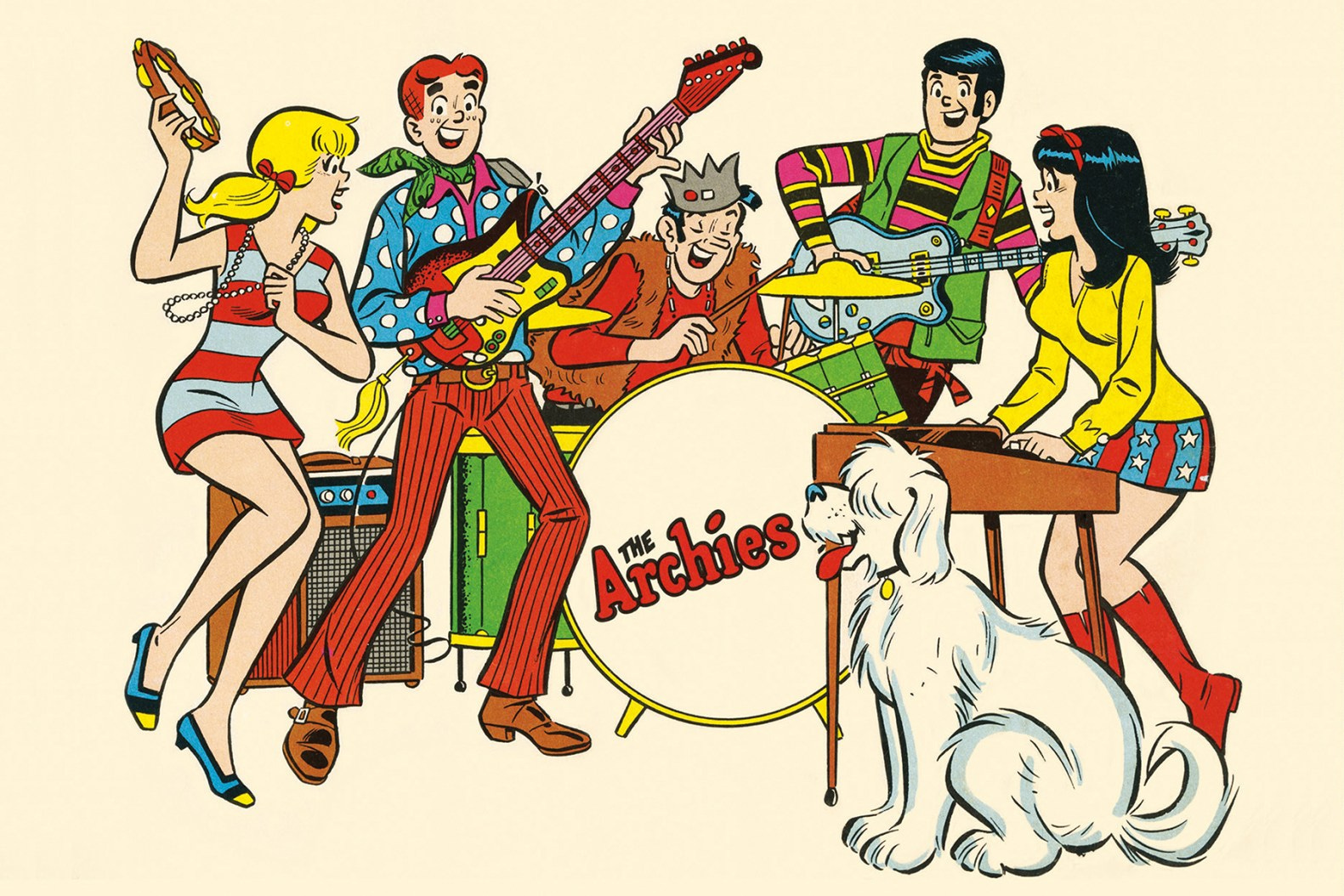
So, yes, George, we will be listening to U2 in 30 years, and The Archies, too!
The List
I came across this list in the 80’s, when I was working for IBM. I shared it with my children along with the advice to:
“Study conventional wisdom. Then shun it.”
I have added one new quip at the end of the list, one made relevant by the rise of AI.
Never Say Never
“We don’t like their sound, and guitar music is on the way out.”
Decca Recording Co. rejecting the Beatles, 1962.
“Heavier-than-air flying machines are impossible.”
Lord Kelvin, president, Royal Society, 1895.
“If I had thought about it, I wouldn’t have done the experiment. The literature was full of examples that said you can’t do this.”
Spencer Silver on the work that led to the unique adhesives for 3-M “Post-It Notepads.
“So we went to Atari and said, ‘Hey, we’ve got this amazing thing, even built with some of your parts, and what do you think about funding us? Or we’ll give it to you. We just want to do it. Pay our salary, we’ll come work for you.’ And they said, ‘No.’ So then we went to Hewlett-Packard, and they said, ‘Hey, we don’t need you. You haven’t got through college yet.’”
Apple Computer Inc. founder Steve Jobs on attempts to get Atari and H-P interested in his and Steve Wozniak’s personal computer.
“Professor Goddard does not know the relation between action and reaction and the need to have something better than a vacuum against which to react. He seems to lack the basic knowledge ladled out daily in high schools.”
1921 New York Times editorial about Robert Goddard’s revolutionary rocket work.
“I think there is a world market for maybe five computers.”
Thomas Watson, chairman of IBM, 1943
“I have traveled the length and breadth of this country and talked with the best people, and I can assure you that data processing is a fad that won’t last out the year.”
The editor in charge of business books for Prentice Hall, 1957
“But what ... is it good for?”
Engineer at the Advanced Computing Systems Division of IBM, 1968, commenting on the microchip.
“There is no reason anyone would want a computer in their home.”
Ken Olson, president, chairman and founder of Digital Equipment Corp., 1977
“This ‘telephone’ has too many shortcomings to be seriously considered as a means of communication. The device is inherently of no value to us.”
Western Union internal memo, 1876.
“The wireless music box has no imaginable commercial value. Who would pay for a message sent to nobody in particular?”
David Sarnoff’s associates, in response to his urgings for investment in the radio in the 1920s.
“The concept is interesting and well-formed, but in order to earn better than a ‘C,’ the idea must be feasible.”
A Yale University management professor in response to Fred Smith’s paper proposing reliable overnight delivery service.
(Smith went on to found Federal Express Corp.)
“Who the hell wants to hear actors talk?”
H.M. Warner, Warner Brothers, 1927.
“I’m just glad it’ll be Clark Gable who’s falling on his face and not Gary Cooper.”
Gary Cooper on his decision not to take the leading role in “Gone With The Wind.”
“A cookie store is a bad idea. Besides, the market research reports say America likes crispy cookies, not soft and chewy cookies like you make.”
Response to Debbi Fields’ idea of starting Mrs. Fields’ Cookies.
“You want to have consistent and uniform muscle development across all of your muscles? It can’t be done. It’s just a fact of life. You just have to accept inconsistent muscle development as an unalterable condition of weight training.”
Response to Arthur Jones, who solved the “unsolvable” problem by inventing Nautilus.
“Drill for oil? You mean drill into the ground to try and find oil? You’re crazy.”
Drillers who Edwin L. Drake tried to enlist to his project to drill for oil in 1859.
“Stocks have reached what looks like a permanently high plateau.”
Irving Fisher, Professor of Economics, Yale University, 1929.
“Airplanes are interesting toys but of no military value.”
Marechal Ferdinand Foch, Professor of Strategy, Ecole Superieure de Guerre.
“Everything that can be invented has been invented.”
Charles H. Duell, Commissioner, U.S. Office of Patents, 1899.
“Louis Pasteur’s theory of germs is ridiculous fiction”.
Pierre Pachet, Professor of Physiology at Toulouse, 1872
“The abdomen, the chest, and the brain will forever be shut from the intrusion of the wise and humane surgeon”.
Sir John Eric Ericksen, British surgeon, appointed Surgeon-Extraordinary to Queen Victoria 1873.
“640K ought to be enough for anybody.”
Bill Gates, 1981
“Learn to code.”
President Joe Biden to coal miners and blue-collar workers during a December 2019 campaign speech in New Hampshire.


That’s a Wrap!
That last quip by Biden was met by silence from his audience. Undoubtedly, the coal miners had a “WTF” moment. “Learn to code?!? Yeah. I’ll get right on that. Hahaha!”
But in fairness to Joe, very few people, with the exception of perhaps a few science fiction writers, could have foreseen how AI would eliminate coding jobs by the tens of thousands, along with scores of other knowledge-worker jobs.
“It’s a jobpocalypse!” some are crying shrilly. “It’s the end of the world as we know it.”1
Hold on, chicken littles. Most of our fatalistic worries are just other candidates for the list. Plenty of smart people have predicted catastrophe in my lifetime, and all of them were wrong. The future is indeterminate.

I mention indeterminism elsewhere in my writings. If you’d like to understand that principle in greater depth, I recommend reading “The Open Future Principle: Understanding the Indeterminate Nature of Our Futures.”
In the meantime, stay open to the possibilities, and remember…
“Today is the day we worried about yesterday, and all is well.”
A line from a song by the American band R.E.M., first released in 1987. Every generation thinks the world is coming to an end, and we’re still here.
Always great to read your newsletters. This one cracked me up on Never say never. Those quips are proof of it. We all live in a yellow submarine. Dive, dive, dive. Find your bliss and go for it! You and Gabi certainly did. Have fun with the end of the world as we see it.
When we moved to Portugal in 2012 we felt we were in a time warp, listening to 60's music everywhere. Ten years later they had moved onto the 70's. Pretty funny. I assume Depeche Mode and Paula Abdul are on tap in the future.
A great list! I was reminded of the Fred Astaire's RKO screen test comment: "Can't act, slightly bald, can dance a little."
Thanks as always, Brant.